
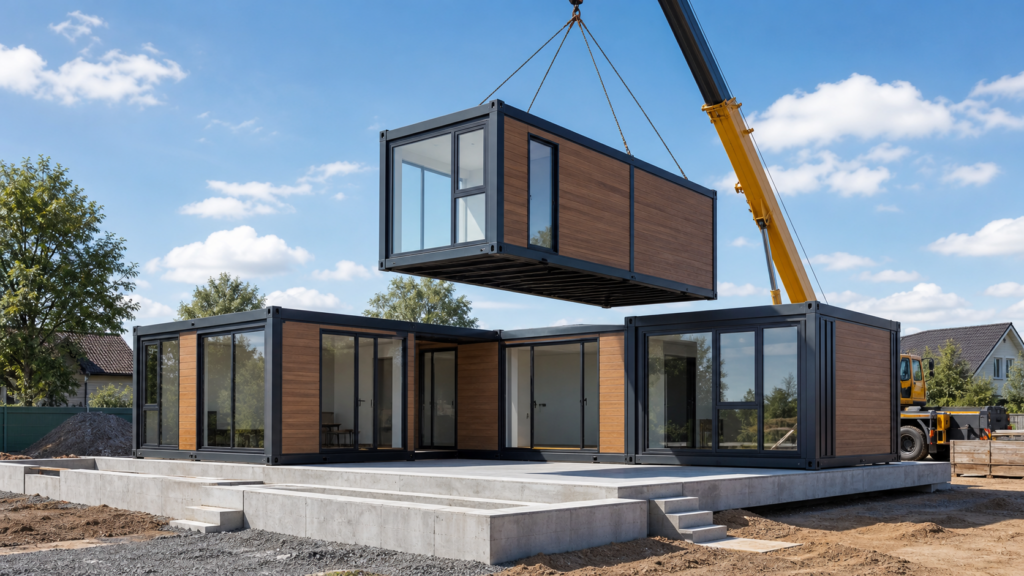
A Modular House is a practical building solution for customers who need faster delivery, cleaner construction, and flexible space planning. Instead of completing every step on the project site, modular units are produced in a factory and then transported for installation. This approach can be used for residential housing, site offices, containerized dormitories, worker camps, schools, canteens, clinics, and commercial buildings.
For buyers, a Modular House is not only about speed. It is also about controlling quality, reducing site work, improving transport efficiency, and creating buildings that can be expanded or relocated when project needs change. If you are planning a prefab container house or a larger modular building project, the following eight benefits can help you understand why modular construction is becoming more popular.
1. Faster Project Delivery
One of the biggest advantages of a Modular House is the shorter construction schedule. Factory production and site preparation can happen at the same time. While the foundation is being prepared on site, the building modules can be manufactured in a controlled workshop. This parallel process can reduce delays and help the project move faster.
For temporary offices, worker accommodation, and emergency housing, speed is often the main reason to choose modular buildings. A mobile container house or detachable container house can be delivered quickly and installed with less site disruption than many traditional building methods.
The Modular Building Institute is a useful industry resource for understanding modular construction and its applications. For buyers, the key point is simple: when production is better organized, the final project is easier to control.
2. More Controlled Factory Quality
A Modular House is built in a factory environment, where materials, tools, workers, and inspection steps can be managed more consistently. Compared with open-air construction, factory production is less affected by rain, wind, mud, and other site conditions.
This can improve the consistency of steel frames, wall panels, doors, windows, wiring positions, and interior finishes. For export projects, factory control is especially important because the buyer may not be able to visit the project site every day. A clear production process, photos, inspection records, and packing lists help reduce risk before shipment.
For a prefab modular container building, quality control should include frame welding, anti-rust treatment, panel installation, roof sealing, electrical layout, and final cleaning. Good factory inspection makes installation smoother after the modules arrive.
3. Flexible Layouts for Different Uses
A Modular House can be designed for many different functions. A single module can become a guard room, sales office, small cabin, toilet unit, or storage room. Multiple modules can be combined to create classrooms, meeting rooms, family housing, kitchens, canteens, or dormitory blocks.
For a containerized dormitory, the layout may focus on repeated rooms, beds, bathrooms, and shared corridors. For a prefab container house, the layout may include a bedroom, living area, bathroom, and small kitchen. For a commercial office, the design may need glass doors, open working space, meeting rooms, and air conditioning positions.
The flexibility of modular design allows buyers to start with a simple plan and then expand later. If the project grows, more units can often be added to the same site plan.
4. Better Cost Planning
Cost control is another reason many buyers choose a Modular House. Because many parts are standardized, it is easier to estimate material use, production time, labor requirements, packing volume, and transport cost. This helps reduce unexpected changes during construction.
Traditional building projects can face delays from weather, labor shortages, site material storage, and complicated subcontractor coordination. Modular projects still need planning, but many tasks are moved into the factory, where the process is more repeatable.
For international buyers, cost planning should include the module system, interior options, insulation level, electrical standard, plumbing design, packing method, shipping cost, local foundation, crane service, and installation labor. A lower product price is not always the best total project cost. The best choice is a balanced system that is easy to ship, install, use, and maintain.
5. Improved Energy and Comfort Planning
A comfortable Modular House needs proper insulation, ventilation, windows, doors, and air conditioning planning. Wall panels and roof systems should match the local climate. In hot regions, shading, roof insulation, and ventilation are important. In cold regions, thicker insulation, better window sealing, and reduced air leakage become more important.
The U.S. Department of Energy provides building energy code resources through its Building Energy Codes Program, which is helpful for understanding why insulation, windows, and building envelope decisions matter. Even if your project is outside the United States, the same basic idea applies: comfort should be designed before production, not repaired after installation.
For modular buildings used as homes, offices, or dormitories, user comfort directly affects satisfaction. A well-insulated prefab container house can feel cleaner, quieter, and more stable in daily use.
6. Cleaner and More Organized Sites
Because many building parts are completed in the factory, the final site can be cleaner and easier to manage. There is usually less cutting, welding, painting, and material storage on site. This is useful for projects in cities, schools, industrial parks, remote locations, and working construction sites where space is limited.
Cleaner sites can also reduce disturbance to nearby people and businesses. For example, a modular office can be installed near an active factory or warehouse without creating a long construction period. A mobile container house can be used for temporary accommodation while keeping the site organized.
The U.S. EPA offers guidance on sustainable management of construction and demolition materials. Modular planning can support this idea by reducing unnecessary site waste and making materials easier to manage.
7. Easier Transport and Installation
Transport is a key part of modular construction. A Modular House should be designed not only for appearance and comfort, but also for loading, shipping, unloading, lifting, and connection. If the modules are too large, transport becomes difficult. If the structure is too weak, installation becomes risky.
Some projects use fully assembled units. Others use flat pack or detachable systems to save shipping space. A detachable container house can be useful when the buyer needs many units in one shipment or wants to assemble the building at a remote site.
Before ordering, buyers should confirm road access, crane position, foundation type, local labor ability, and utility connection points. A good supplier should provide installation drawings, packing information, and clear connection details.
8. Expandable for Future Needs
Project needs often change. A site may need more dormitory rooms, a school may need extra classrooms, or a business may need a larger office. Modular buildings are useful because they can often be expanded with additional units.
A Modular House can also be adapted for different phases of a project. A unit used as a site office today may later become a storage room, sales office, or temporary accommodation. This flexibility gives the buyer more value over time.
For long-term projects, it is smart to plan expansion early. Keep space for future units, design simple utility routes, and choose a modular system that can be repeated. Future expansion is much easier when the first layout already considers it.
How to Choose the Right Modular House Supplier
When selecting a supplier, do not only compare price. Ask about steel frame specifications, wall panel options, insulation materials, roof waterproofing, electrical standards, packing method, shipping experience, and installation support.
A reliable supplier should help you match the building system to the project purpose. For example, a containerized dormitory needs strong repeated room design and easy maintenance. A prefab container house for residential use needs better comfort and interior finishing. A mobile container house needs simple transport and fast setup.
The best Modular House supplier should understand both production and site use. That combination is what turns a product into a successful project.
FAQ
What is a Modular House?
A Modular House is a building made from prefabricated modules that are produced in a factory and then transported to the project site for installation.
Is a modular house the same as a container house?
Not exactly. A container house is one type of modular building. A modular house can use container-style steel frames, flat pack systems, or other prefabricated module structures.
Can a modular house be used permanently?
Yes. A modular house can be used for long-term or permanent projects when the structure, insulation, waterproofing, foundation, and local building requirements are properly planned.
How long does it take to install a modular house?
Installation time depends on project size, foundation, site access, crane availability, and the building system. Small units can be installed quickly, while larger projects need more planning.
What should buyers check before ordering a modular house?
Buyers should check layout, dimensions, insulation, steel frame, wall panels, windows, doors, electrical system, plumbing, packing method, shipping cost, foundation, and installation support.