
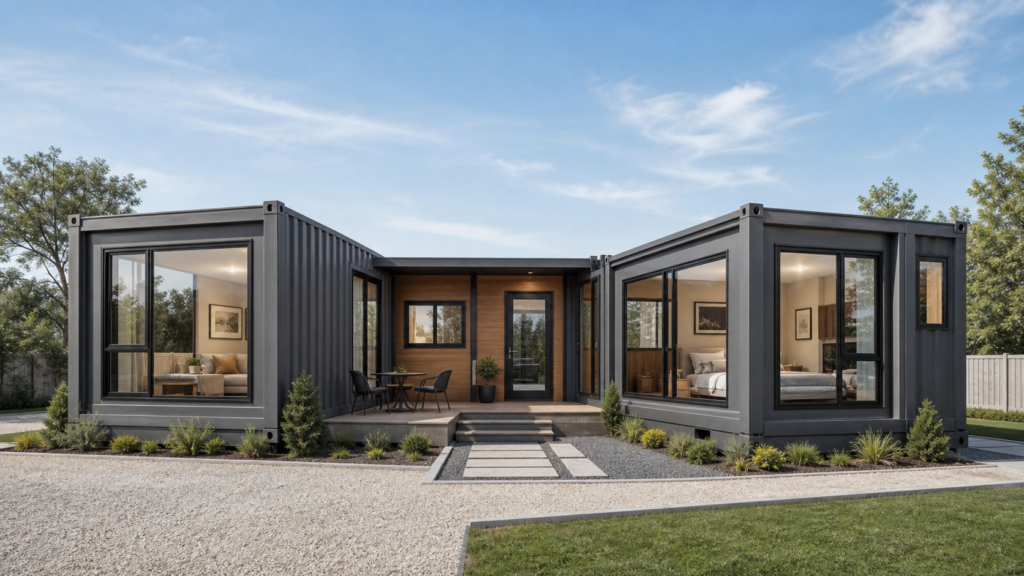
Container House Design is becoming a practical choice for customers who need fast, flexible, and cost-controlled buildings. From worker accommodation and containerized dormitories to prefab offices, site camps, schools, kitchens, and small residential units, container buildings can be adapted to many project types.
For buyers, contractors, and project managers, the right Container House Design can reduce construction time, simplify site work, and create a more comfortable space for daily use. Below are seven smart ideas to help you plan a modern container house project with better function, better appearance, and stronger SEO-friendly product value.
1. Start With the Real Use of the Building
Before choosing a container size or layout, define how the building will be used. A container house for a family residence needs a different plan from a containerized dormitory, site office, canteen container, or container school. The number of users, daily traffic, privacy requirements, storage needs, and local climate should all influence the design.
For example, a worker dormitory may need repeated rooms, shared bathrooms, and simple circulation. A prefab container house for a holiday cabin may need larger windows, a private bathroom, a compact kitchen, and a terrace. A container office should focus on meeting space, wiring, air conditioning, and a professional appearance.
When the purpose is clear, the Container House Design becomes easier to control. You can avoid unnecessary decoration, reduce waste, and make sure each square meter supports the real project need.
2. Choose the Right Modular Layout
According to the Modular Building Institute, modular construction is widely used for faster and more controlled building delivery, which is one reason many buyers choose container-style modular projects. One advantage of a modular house is that units can be arranged in many ways. A single container can work as a small office, guard room, storage room, or compact cabin. Multiple units can be connected side by side to create larger rooms, or stacked to create two-story buildings.
Single-Unit Design
A single-unit prefab container house is suitable for small offices, sales rooms, security rooms, temporary accommodation, and compact living units. It is easy to transport, fast to install, and simple to maintain.
Side-by-Side Combination
Two or more container units can be joined together to create a wider interior. This is useful for classrooms, meeting rooms, clinics, canteens, and family-style housing.
Stacked Modular Design
Stacking modules can save land and create a more permanent building appearance. This design is often used for containerized dormitories, site camps, and multi-room accommodation projects.
The best layout depends on land size, crane access, transportation limits, and local building requirements. A smart Container House Design should make installation easy while keeping the interior comfortable.
3. Improve Comfort With Insulation and Ventilation
For insulation planning, buyers can also review general building energy guidance from the U.S. Department of Energy to better understand why wall panels, roof insulation, and window systems matter.
Comfort is one of the most important parts of container building design. A steel container structure can become hot in summer and cold in winter if insulation is not planned correctly. Wall panels, roof insulation, floor layers, windows, doors, and air conditioning all need to work together.
For many projects, sandwich panels with rock wool, glass wool, EPS, or PU insulation are used to improve indoor temperature control. Double-glazed windows can also help reduce heat transfer and outside noise. In hot areas, roof shading and ventilation gaps can make the building more comfortable. In cold areas, thicker insulation and airtight window systems are more important.
Good ventilation is equally important. Bathrooms, kitchens, and dormitory rooms need fresh air and moisture control. A well-planned prefab container house should include windows, exhaust fans, vents, and air conditioning positions from the beginning.
4. Use Windows and Doors to Upgrade the Appearance
The fastest way to improve a container house is to upgrade the window and door layout. Large windows can bring more daylight into the room and make the building look more modern. Sliding glass doors can connect the interior with a terrace or outdoor area. Smaller high windows can improve privacy while still allowing natural light.
For commercial projects, the front side of the container can include glass walls, aluminum doors, or a clean facade system. For dormitories and site offices, standard windows and steel doors may be more practical and cost-effective.
A good Container House Design balances appearance and budget. It does not need to look complicated. Clean lines, proper window spacing, simple colors, and durable exterior panels can make the whole building look professional.
5. Plan Utilities Before Production
Electrical wiring, plumbing, drainage, lighting, air conditioning, and internet cables should be planned before production. This is especially important for container houses that are manufactured in a factory and shipped to the project site.
If the electrical points are not planned early, the installation team may need to cut panels or modify the wall after delivery. This can increase labor cost and reduce the final finish quality. Bathroom and kitchen positions should also be decided early because they affect water supply, drainage, waterproofing, and floor design.
For a mobile container house, utility connections should be simple and easy to access. For a more permanent modular house, the design can include hidden wiring, stronger plumbing systems, and better interior finishing.
6. Select Durable Materials for Long-Term Use
Material selection affects the life span, maintenance cost, and customer experience of the building. A detachable container house usually includes a steel frame, wall panels, roof system, floor structure, windows, doors, and interior fittings. Each part should match the project environment.
For coastal areas, anti-corrosion treatment is important because salt air can affect steel parts. For rainy areas, roof drainage and waterproof joints need special attention. For high-traffic dormitories, flooring should be strong and easy to clean. For offices and residential cabins, interior panels should look clean and feel comfortable.
Durability is not only about using expensive materials. It is about matching the right material to the right use. A well-planned Container House Design can reduce later repair work and help the building perform better over time.
7. Design for Transport and Fast Installation
One reason buyers choose container buildings is speed. However, fast installation depends on smart design. The building should be easy to load, ship, unload, lift, connect, and assemble on site.
For export projects, container dimensions and packing methods are important. Some systems are shipped as assembled units, while others are shipped as flat pack or detachable systems to save transportation space. A detachable container house can be useful when the buyer needs more units in one shipment or wants flexible installation.
The project team should also consider foundation type, crane access, road condition, and local labor skill. If the installation plan is simple, the project can be completed faster and with fewer unexpected costs.
FAQ
What is Container House Design?
Container House Design is the planning process for a building made from container-style modular units. It includes layout, structure, insulation, windows, doors, utilities, transport, and installation.
Is a container house suitable for long-term use?
Yes, a container house can be suitable for long-term use when the steel frame, insulation, waterproofing, ventilation, and interior materials are designed correctly for the local climate and project purpose.
What is the difference between a modular house and a container house?
A modular house is a building made from prefabricated modules. A container house is one type of modular building that uses container-style steel frames or container-based units.
Can container houses be customized?
Yes. Container houses can be customized with different layouts, windows, doors, bathrooms, kitchens, wall panels, roof systems, colors, and interior finishes.
How long does it take to install a prefab container house?
Installation time depends on project size, foundation, site condition, and building system. Small single units can often be installed quickly, while larger multi-unit projects need more planning and connection work.